
Hindi TV abroad
How to Watch Hindi TV Abroad
Published · 9 min read · By the DREXTV INDIA editorial team

Hindi is the easiest Indian language to find abroad and the one most households settle on, because it is usually the language everyone in the house can follow. The real difficulty is not availability but timing: Indian prime time lands in the middle of the working day across Europe and overnight in North America, which makes catch-up more important than the live schedule.
Of all the Indian languages, Hindi is the one you are most likely to find on any given service. It is carried by satellite, by official streaming platforms, by British pay-TV, and by every Indian streaming service aimed at the diaspora.
That abundance means the interesting questions about watching Hindi television abroad are not really about access. They are about how it fits into a household that is living on a different clock, in a different country, often with children who speak the local language better than they speak Hindi.
Tamil households should start with how to watch Tamil TV outside India instead. Both sit on the blog with the rest of the language reading.
Why Hindi ends up being the household default
In a lot of Indian homes abroad, Hindi is not anyone's first choice individually but it is everyone's second choice collectively. A Malayalam-speaking parent and a Punjabi-speaking partner will often settle on a Hindi serial. Children born abroad frequently understand more Hindi than any other Indian language, because it is the one they hear most consistently outside family phone calls.
This is worth naming because it changes what you should look for. If Hindi is the shared-language default in your house, breadth matters more than any single channel — general entertainment, news, film and children's programming all get used, often by different people.
The timing problem, and what to do about it
Indian prime time is roughly 8pm to 11pm IST. India runs four and a half hours ahead of Central European Time in winter and three and a half hours ahead in summer. That puts an 8pm serial at around 3:30pm in Berlin, Warsaw or Amsterdam — the middle of a working afternoon.
For North America it is worse. An 8pm broadcast in India is late morning on the US East Coast and very early morning on the West Coast.
The practical consequence is that if you are relying on live viewing alone, you will miss most of what you actually want to watch. Catch-up is not a bonus feature for viewers abroad, it is the thing that makes the service usable. When you are comparing options, check that it exists and how far back it goes.
Hindi television and children raised abroad
One of the most common reasons parents give for subscribing is language exposure for children. Hindi children's channels provide a steady, everyday source of spoken Hindi that a weekend class cannot match simply because of the hours involved.
We would be cautious about overselling this. We are not going to claim that television teaches a language, and no honest service should. What it does provide is consistent, low-effort exposure to the sound and rhythm of spoken Hindi in the home, which is something parents abroad often struggle to arrange any other way.
What to check before you pay for anything
Three things, in this order.
Does it include catch-up, and how many days? Without it, the time difference will defeat you.
Does it work on the device you actually own? Smart TV compatibility varies more than people expect, and it is worth confirming your specific model rather than assuming.
If there is a particular channel your family watches, is it carried? Ask directly and get a direct answer. Any service that responds to that question with a large channel count rather than a yes or no is avoiding it.
Mixed-language houses, and why Hindi still does most of the work
A Malayalam serial on one television and a Punjabi music channel on a phone is a normal evening abroad. Hindi is still the language that fills the gaps: the partner who does not speak Malayalam, the child who understands more Hindi than Gujarati, the guest who only follows news in Hindi.
That is why this article is not a substitute for the Hindi TV channels page, and why one subscription covering all eleven languages is the commercial shape. If Hindi is truly all you watch, say so — a handful of large Hindi channels may already be on a British pay-TV pack, or on satellite if you can install a dish. Regional languages are the usual reason people still look for a streaming service.
News, serials, films, children — four different clocks
Hindi news is the one category that still wants to be live. Serials want catch-up. Films sit in the on-demand library (the business reports more than 150,000 films and series across every language) and on film channels. Children's programming is background exposure, not appointment viewing, and we will not claim it teaches the language.
If you only wanted films, and an official Indian streaming app is sold in your country, that app may be the cheaper honest answer. Live Hindi news plus daily serials is the combination that official apps often do not replace. Catch-up here is eight hours every day. Simultaneous streams are unpublished — ask if two rooms need to watch at once.
A British pay-TV pack is sometimes enough
The United Kingdom is the one European market where mainstream platforms already carry some Hindi channels. If that pack covers what your household watches, adding a second subscription is a waste. The remaining reasons to look elsewhere are regional languages the pack skips, a fixed six- or twelve-month plan instead of another rolling contract, or a rented house that never had that pay-TV box.
Students and recent arrivals in shared houses rarely have the pack. A laptop or a Fire TV Stick on the existing broadband is the realistic setup. Ask about the Hindi news and serial names either way — what a channel count actually means is the short method.
Catch-up is eight hours every day on this service, same as every language. That still is not a week of archive. If you need older episodes, ask before you assume they are there.
Frequently asked
Can I watch Hindi TV channels outside India?
Yes. Hindi is the most widely available Indian language abroad, through satellite, official streaming platforms and dedicated Indian TV streaming services. A streaming service requires only a broadband connection and a supported device. See Hindi TV channels for what a subscription actually covers.
What time does Indian prime time air in Europe?
Indian prime time runs from about 8pm IST. India is three and a half to four and a half hours ahead of Central European Time depending on the season, so an 8pm broadcast airs at roughly 3:30pm to 4pm in most of Europe.
Is Hindi television useful for children born abroad?
Many parents subscribe partly for that reason, because children's channels give regular exposure to spoken Hindi at home. It is exposure rather than instruction, and we would not claim more than that.
We speak two Indian languages at home. Is Hindi still the one to start with?
Often yes, because it is the language everyone can follow. The regional language still matters to the parent who does not want to lose it. One subscription covers both — see Hindi TV channels and the matching language page for the other one. Name the channels either way.
How much Hindi catch-up is included?
Eight hours every day, the same as every other language. That is an operator-stated figure. If you need programmes older than that, ask before you subscribe rather than assuming a week of archive exists.
The rest of the Hindi TV abroad reading is collected on the DREXTV India blog.
More on Hindi TV abroad — including questions that need a longer answer — is on the frequently asked questions page and in the blog.
More from the blog
Or start with the frequently asked questions if you want the short version, or browse every article on the blog.
 9 min read
How to Watch Tamil TV Outside India
Tamil TV outside India streams over ordinary broadband. Europe’s Tamil audience is two communities — families from Tamil Nadu, and a longer-settled Sri Lankan Tamil population in France, Germany, Switzerland and the Nordics.
Read the guide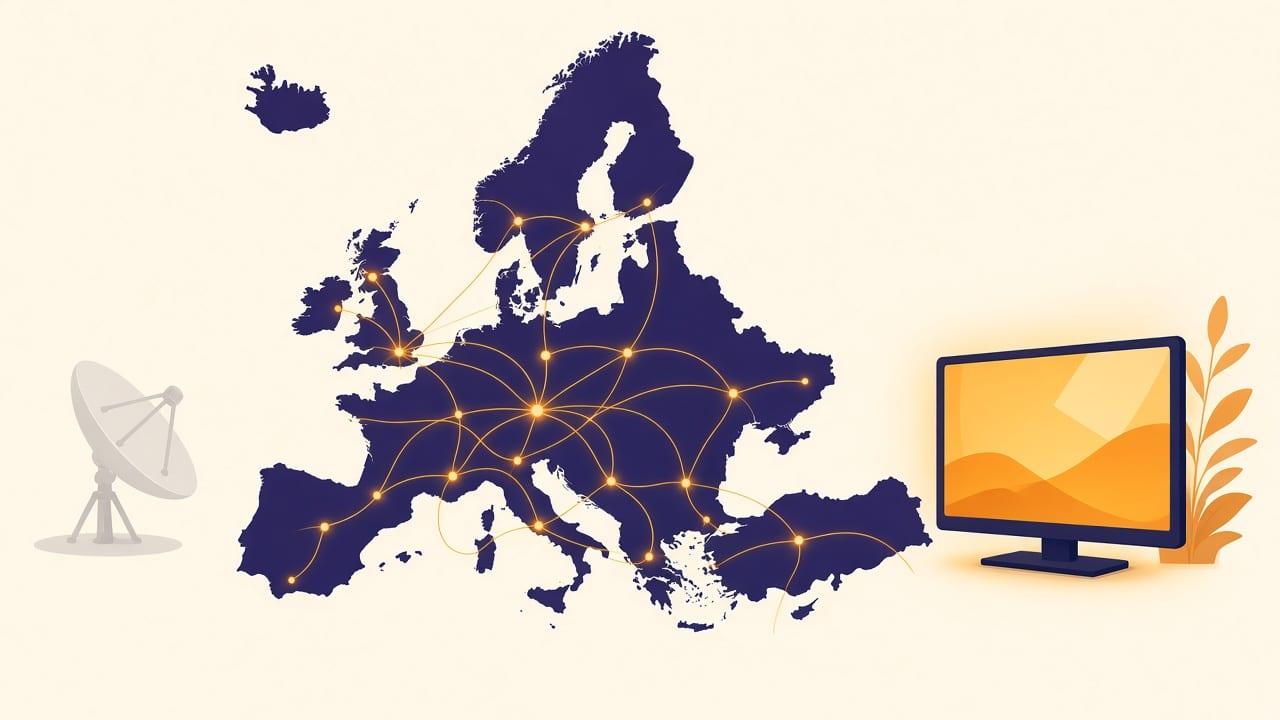 9 min read
How to Watch Indian TV in Europe: A Practical Guide
You can watch Indian TV in Europe over ordinary broadband — no dish. The realistic options are satellite (if you control a wall), official Indian apps (if sold in your country), or a dedicated streaming service for live channels and regional languages.
Read the guide 9 min read
Indian TV in Poland: What Viewers Should Know
Poland now has one of the fastest-growing Indian populations in Europe — around 25,500 registered Indian workers as of mid-2026, the third-largest foreign worker group in the country. Polish television carries no Indian programming, and the community's usual workarounds, satellite dishes and VPNs, both have real problems.
Read the guide
Have a question this did not answer?
Message us. We would rather talk you out of subscribing than have you sign up on the wrong assumption.
WhatsApp and Telegram: +971 52 434 6367. Ask us about a specific channel before you subscribe — we would rather tell you it is not carried than take your money.